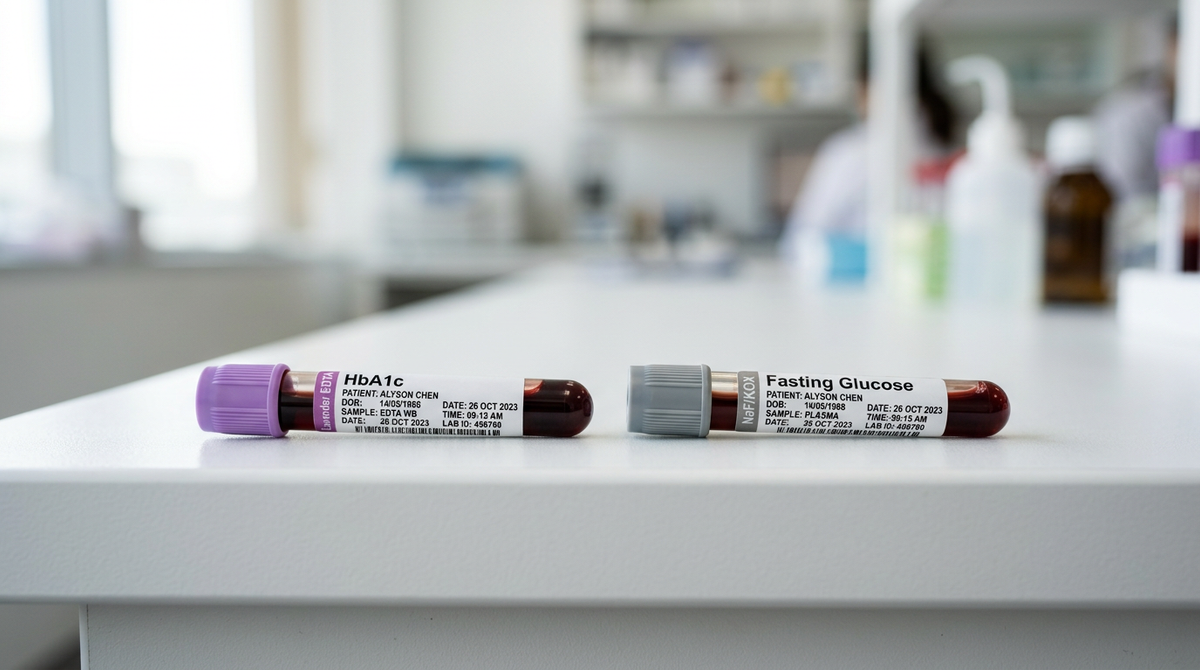
Most people get a fasting sugar test done and think they are in the clear.
But here is the uncomfortable truth: fasting glucose can miss diabetes in a significant number of people. It only captures one moment in time. What happens to your blood sugar across weeks and months? That is where most standard tests go completely silent.
If you have ever wondered which test to ask for, or why your doctor ordered one over the other, this article breaks it down clearly. No jargon. No guesswork.

Why This Question Matters More Than You Think
India carries one of the highest diabetes burdens in the world.
According to the International Diabetes Federation, India had approximately 101 million people living with diabetes as of 2023. Another 136 million were estimated to be in the pre-diabetes stage.
The WHO estimates that nearly 50% of people with diabetes globally remain undiagnosed. A big reason for this is that the wrong test was used, or the test was interpreted without enough context.
The Indian Council of Medical Research (ICMR) guidelines now recommend HbA1c as a standalone diagnostic criterion for diabetes, alongside fasting glucose and the Oral Glucose Tolerance Test. Knowing the difference between these tests is no longer optional information.
What Does Fasting Blood Sugar Actually Measure?
A fasting glucose test measures the concentration of glucose in your blood at a single point in time, after you have not eaten for at least 8 to 10 hours.
It is quick, affordable, and widely available. That is why it has been the default diabetes screening tool for decades.
But it has real limitations. Your fasting glucose can fluctuate based on stress, poor sleep, an infection, or even what you ate two days ago. One normal reading does not guarantee your blood sugar management is healthy across the board.
A fasting glucose reading below 100 mg/dL is considered normal. Between 100 and 125 mg/dL suggests pre-diabetes. At 126 mg/dL or above on two separate tests, a diabetes diagnosis is confirmed.

What Does HbA1c Actually Measure?
HbA1c stands for Glycated Hemoglobin. It measures the percentage of hemoglobin in your red blood cells that has glucose attached to it.
Because red blood cells live for roughly 90 days, this test gives you a picture of your average blood sugar control over the past 2 to 3 months. One meal, one stressful week, or one skipped dose of medication cannot hide from it.
An HbA1c below 5.7% is considered normal. Between 5.7% and 6.4% indicates pre-diabetes. At 6.5% or above, confirmed on repeat testing, it meets the diagnostic threshold for diabetes.
This is why many diabetologists consider HbA1c the more honest of the two tests. It is not asking how you performed today. It is asking how you have been living for the last three months.
Head to Head: HbA1c vs. Fasting Glucose

When Fasting Sugar Can Miss the Bigger Picture
Here is a scenario that plays out more often than it should.
Someone's fasting glucose comes back at 98 mg/dL. Technically normal. They feel reassured and move on. But their post-meal glucose is spiking to 180 mg/dL or above every single day.
Over months, that repeated spiking causes damage to blood vessels, nerves, and kidneys. The fasting test never flagged it because it was only looking at one window.
HbA1c would have caught this pattern. This is exactly why relying on a single fasting result without a broader panel can create a false sense of security.
Where OGTT Fits In
The Oral Glucose Tolerance Test (OGTT) is considered the gold standard for diagnosing diabetes and gestational diabetes, though it is rarely used in routine screening because it takes two hours.
During an OGTT, you drink a glucose solution and your blood is drawn at intervals. It measures how your body handles a real glucose load.
It is particularly useful when HbA1c and fasting results are borderline, or when screening for gestational diabetes during pregnancy. For most people, a combination of fasting glucose and HbA1c covers what is needed. OGTT is brought in when the picture is still unclear.

Which Test Should You Get?
If you have never been tested before and want a solid baseline, ask for both fasting glucose and HbA1c together.
If you are already diagnosed with diabetes and want to track your management over time, HbA1c is the primary metric your doctor will follow.
If you are pregnant or your other results are inconclusive, your doctor may add an OGTT.
The real answer is that these tests work best together, not as substitutes for each other.
Looking for a complete diabetes screening at home?

Book Your Diabetes Screening at Home
Skip the hospital queue. Get HbA1c, Fasting Glucose, and OGTT collected from your home by a certified phlebotomist.
Results delivered digitally. Report reviewed by qualified lab professionals.