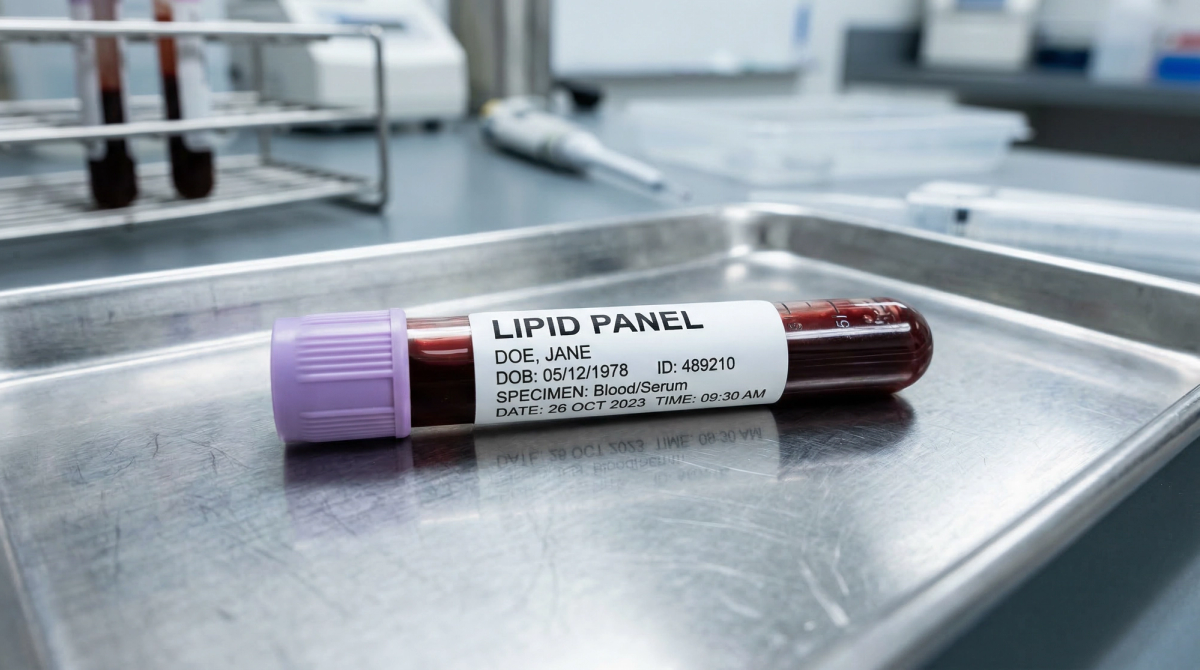
Most people walk out of a routine health checkup with a cholesterol report and think they are covered.
They check if their total cholesterol is under 200, maybe glance at LDL, and feel reassured.
But cardiologists and metabolic health specialists have known for years that a standard lipid profile often misses the patients who are most at risk.
You can have "normal" LDL and still have a heart attack. This is not rare. It happens more than most people realize.
The problem is not just what your test measures. It is what your test does not measure at all.
Advanced lipid testing fills that gap, and for people with diabetes, family history of heart disease, or unexplained weight gain, it can genuinely be life-changing information.

Cardiovascular disease is the leading cause of death in India, responsible for nearly 28% of all deaths annually, according to the Indian Council of Medical Research (ICMR).
The World Health Organization (WHO) estimates that over 80% of premature heart disease and stroke is preventable with early detection and lifestyle changes.
What makes this alarming is that many of these cases occur in people who had "acceptable" cholesterol readings on their last test.
A 2020 study published in the Journal of the American College of Cardiology found that roughly 50% of patients hospitalized for a heart attack had LDL levels considered within normal range.
In India specifically, the ICMR-INDIAB study found that nearly 1 in 4 adults has some form of dyslipidemia, many of whom had never been flagged by a routine lipid profile.
The data tells a clear story: the standard test is not the complete test.
What Does a Standard Lipid Profile Actually Measure?
A routine lipid profile typically includes four values:
- Total Cholesterol
- LDL Cholesterol (Low-Density Lipoprotein)
- HDL Cholesterol (High-Density Lipoprotein)
- Triglycerides
These are useful starting points. But they are calculated values, not direct measurements.
LDL, for example, is usually estimated using the Friedewald equation, which becomes inaccurate when triglycerides are elevated, which is increasingly common among Indians who consume high-carb diets.

Where the Standard Test Falls Short
The core issue is that LDL measures the amount of cholesterol in the blood. But what actually damages arteries are the particles that carry that cholesterol, not the cholesterol itself.
Two people can have the same LDL number but very different numbers of LDL particles. The person with more particles has a significantly higher risk, and the standard test will not catch that.
This is where advanced lipid markers come in.
What Is ApoB and Why Does It Matter?
Apolipoprotein B (ApoB) is a protein found on the surface of every atherogenic (artery-clogging) lipoprotein particle, including LDL, VLDL, and IDL.
Each of these particles carries exactly one ApoB molecule.
So when you measure ApoB, you are directly counting how many harmful particles are circulating in your blood.
This is widely considered the most accurate predictor of cardiovascular risk available in routine testing today.
Research published in The Lancet has shown that ApoB is a stronger predictor of cardiovascular events than LDL-C, especially in people with metabolic syndrome, Type 2 diabetes, or obesity.
What Is ApoA1 and How Is It Different from HDL?
Apolipoprotein A1 (ApoA1) is the main protein in HDL, the so-called "good cholesterol."
But just like with LDL, the number of HDL particles matters more than the total amount of HDL cholesterol.
ApoA1 gives a more direct and reliable measure of how well your body is clearing cholesterol from the arteries, a process called reverse cholesterol transport.
Low ApoA1, even in someone with a "normal" HDL reading, suggests the protective mechanism is not functioning properly.
The ApoB to ApoA1 Ratio: A Powerful Risk Indicator
When you look at both ApoB and ApoA1 together, the ratio becomes one of the strongest independent predictors of cardiovascular risk in clinical research.
The INTERHEART study, one of the largest global studies on heart disease risk factors, found that the ApoB/ApoA1 ratio was a better predictor of heart attack risk than the traditional cholesterol ratio, across all regions including South Asia.

RECOMMENDED TESTS FROM CURA
Your Heart Deserves More Than a Basic Checkup
A standard cholesterol test tells you part of the story. Advanced lipid testing tells you all of it.
Knowing your ApoB and ApoA1 levels today could help you avoid a cardiovascular event years down the line. That is not an overstatement. It is what the evidence consistently shows.
Cura makes it simple. No clinic visits, no waiting rooms.
Book Your Home Sample Collection Today Get a complete lipid and advanced lipoprotein panel, collected at your doorstep, results in 24 hours.