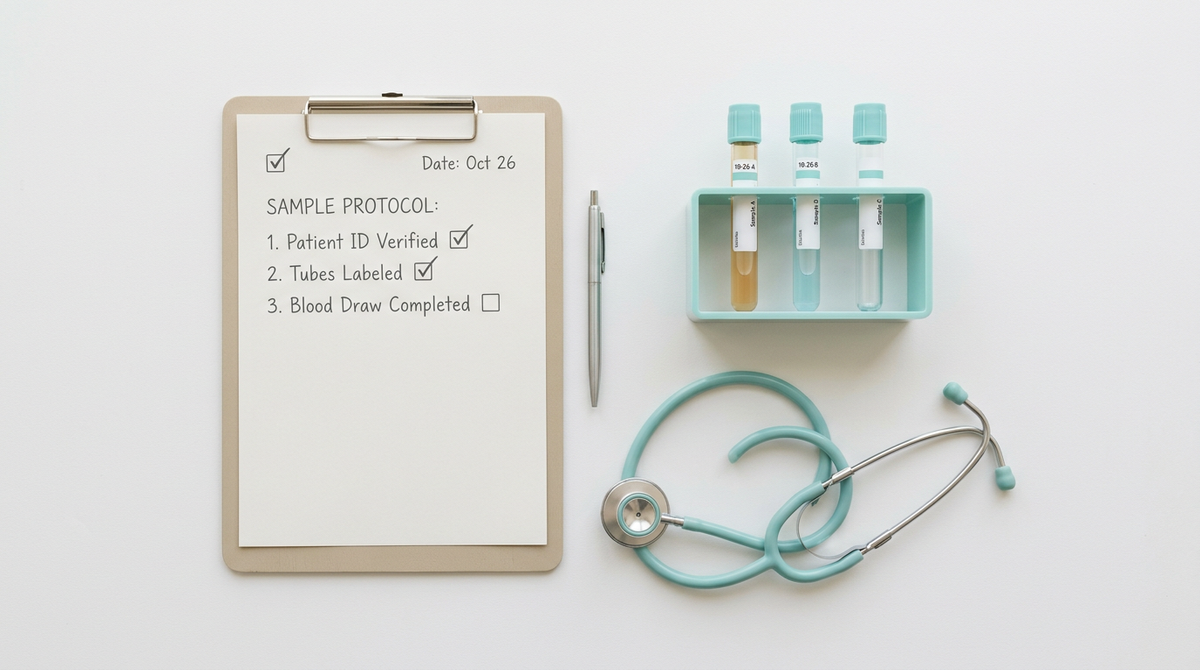
Most people assume that getting more tests done equals better health awareness.
It feels logical. The more you check, the more you catch. But that assumption is actually one of the most common health myths doing the rounds today.
The truth is that unnecessary testing creates unnecessary anxiety, unnecessary costs, and in many cases, leads to unnecessary treatment.
This article breaks down why smarter testing beats more testing every single time.

The Over-Testing Problem Is Real and Backed by Data
The World Health Organization has consistently flagged over-diagnosis and over-testing as a growing public health concern, particularly in low and middle-income countries like India.
A 2023 Lancet study estimated that unnecessary diagnostic tests cost the global healthcare system over $200 billion annually, with a significant portion linked to repeat or redundant testing.
In India, a report by ICMR noted that urban populations are increasingly prone to "health anxiety-driven testing," where individuals request panels of 40 to 60 tests with no clinical indication.
The outcome? False positives. Repeat tests. Unnecessary referrals. And a cycle that drains both money and mental peace.
What Actually Happens When You Over-Test
Here is something most labs will not tell you upfront.
Every diagnostic test has a built-in margin for error. This is called the false positive rate. Even a test with 95% accuracy will flag 5 out of 100 healthy people as potentially unwell.
When you run 20 tests at once, the statistical likelihood of at least one false positive approaches near certainty.
That false positive then triggers more tests, a specialist visit, more anxiety, and sometimes even unnecessary medication.
This is not a hypothetical. It is a well-documented clinical pattern called the diagnostic cascade.
The problem is not the test itself. The problem is testing without context, without symptoms, and without a doctor's guidance.

The Four Tests That Actually Matter for Most Indians
Rather than running a 50-parameter panel every quarter, most adults benefit far more from getting a focused set of evidence-based tests done regularly and correctly.
Here is what the clinical evidence supports for routine preventive screening in the Indian population:

How Often Should You Actually Get Tested
For a healthy adult under 40 with no chronic conditions, an annual panel covering the four tests above is sufficient.
If you have a family history of thyroid disorders, diabetes, or anaemia, twice a year makes sense for specific markers.
If you are already managing a condition like hypothyroidism or anaemia, your doctor will define the frequency based on your treatment plan.
The key principle is this: let your health status and medical history drive the testing frequency, not fear, habit, or marketing.

What Smart Preventive Testing Looks Like
Smart testing starts with a conversation, not a catalogue.
A good diagnostic approach involves noting your current symptoms, your family history, your age and gender, and then mapping those to clinically validated markers.
It does not involve ticking every box on a lab menu because it feels thorough.
Cura is built around this philosophy. Home sample collection, curated wellness packages, and reports that are actually easy to understand.
Ready to test smarter, not more?
Skip the 50-parameter anxiety spiral. Get the four tests that actually tell you something useful, from the comfort of your home.